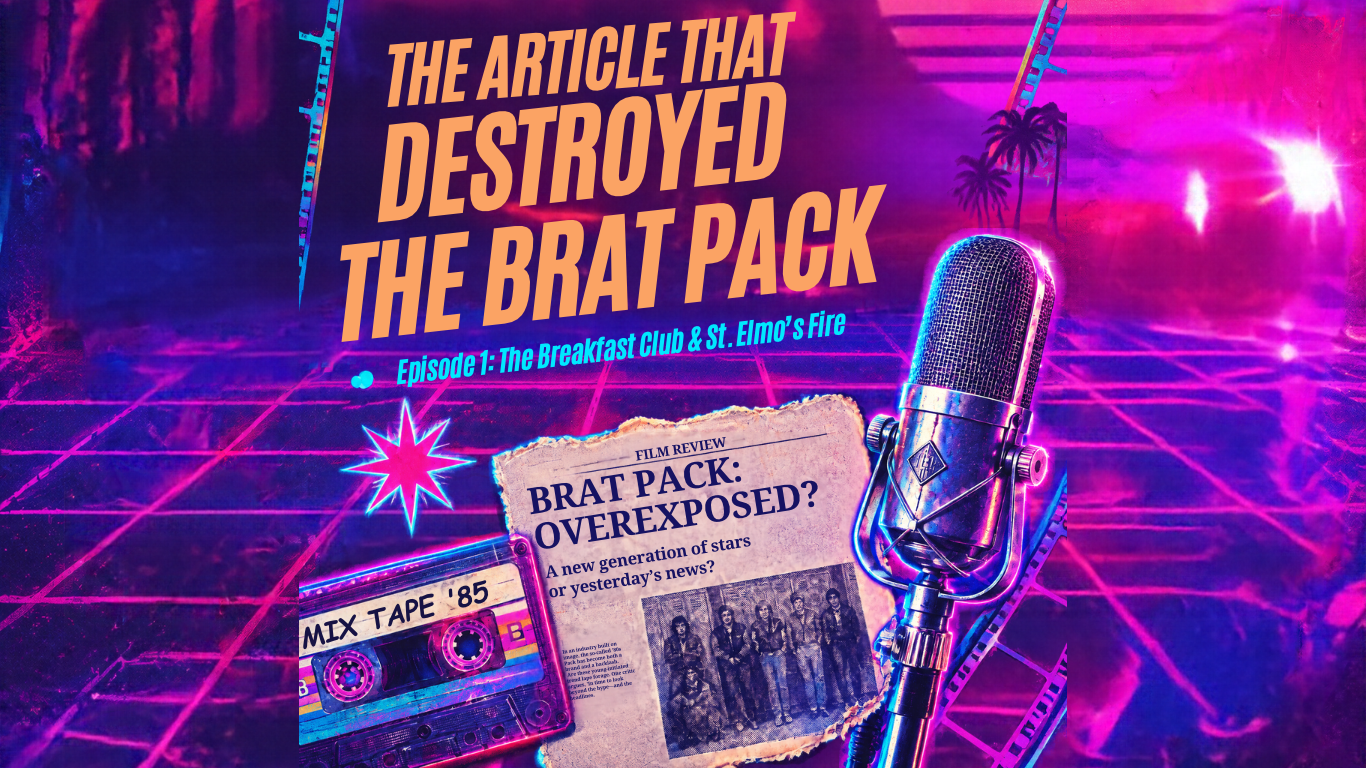
Episode 1: The Article That Destroyed The Brat Pack
Before celebrity branding was managed by high-priced PR firms and non-disclosure agreements, a single night of drinking in Los Angeles dismantled a Hollywood dynasty forever.
In the inaugural episode of Before the Algorithm, our host Liv pulls back the curtain on the definitive public spectacle that shattered the golden era of 1980s youth cinema. We hit rewind on June 10, 1985—the exact date New York Magazine hit the stands with a cover story that turned a tight-knit family of cinematic icons into a dirty industry punchline overnight.
🎥 The Illusion of the Sunset Strip
In the mid-1980s, a raw, unprecedented youth movement completely conquered the Hollywood box office. A specific collective of stunning, ultra-charismatic young actors—including Rob Lowe, Demi Moore, Emilio Estevez, and Judd Nelson—dominated the cultural landscape. They didn't just share screen time in era-defining masterpieces like The Breakfast Club and St. Elmo’s Fire; they shared a lifestyle.
To the millions of teenagers watching from the dark of the theatre, they represented the ultimate, untouchable peak of youthful freedom. They were beautiful, wealthy, and seemingly invincible, ruling over the neon-lit clubs of the Sunset Strip in an era before paparazzi culture became weaponised.
📝 The Fatal Tag: Coining the "Brat Pack"
But the entire architecture of their fame was resting on a volatile, fragile foundation. The industry had never seen young stars hold this much unchecked commercial leverage, and the old-guard media establishment was growing deeply resentful.
Enter David Blum—a brilliant, fiercely cynical journalist dispatched by New York Magazine to write a routine profile on Emilio Estevez. What was supposed to be a standard promotional interview rapidly spiralled into a multi-day bender through the elite watering holes of Los Angeles. Blum watched as the young actors carried themselves with a raw, unedited arrogance, treating the physical world as their personal playground.
When Blum sat down at his typewriter, he didn't write a glowing celebrity puff piece. Instead, he forged a single, devastatingly brilliant linguistic phrase that would act as a cultural death sentence: The Brat Pack.
💥 The Fallout of the Printed Word
The impact of the article was instantaneous, spectacular, and completely irreversible. In 1985, a printed magazine article carried the absolute power of a modern viral trend, but without a search engine to bury the aftermath.
• The Permanent Label: The term "Brat Pack" didn't just describe their social circle; it weaponised their youth against them, framing them as spoiled, untalented, and hyper-privileged children.
• The Structural Collapse: The tight-knit family of actors fractured instantly under the weight of the press. Audition rooms turned toxic. Directors refused to cast them together, terrified of the "Brat Pack" stigma, effectively strangling a historic cinematic movement in a fraction of a second.
🎧 Listen to the Archival Deep Dive
Hit play on the player above to hear Liv deliver the mellow, late-night history of how a single night of journalistic betrayal permanently broke the illusion of Hollywood invincibility—proving that before data streams existed, the printed word was the ultimate algorithm.